
5 Brilliant Low-FODMAP Cooking Hacks You Will Wonder How You Did Without
When I went through the low-FODMAP diet a few years ago I was bewildered by the amount of stuff I needed to remember. The long lists of what I could and couldn’t eat. Fortunately the dieticians at St Thomas’ Hospital in London had really good information and guidance.
Once you get past the first long supermarket shop, where you are peering at the labels on everything for hours, you settle into a routine.
However I, like everybody else I know that has been through the process, hit a wall after about 2 weeks. All I seemed to be eating was the same few dishes - lots of plain chicken, fish and the allowable veggies plus a few bits of fruit.
I was oh so bored. I needed to find new ways to cook. So I got stuck in, started researching, experimenting, talking to people.
One of the first things I developed was a way to make the Indian food I love to cook without garlic and onions. Before long I was turning out great dishes. Check out my tasty low-FODMAP chicken curry recipe here.
I soon worked out that by using a few tricks you can really bring out flavour in your cooking without the FODMAPs.
A quick note: the low-FODMAP diet is a temporary exclusion phase, not necessarily a forever diet. The whole point is to reintroduce foods in a controlled way to find out what your gut actually can't handle - for me, garlic turned out to be fine again in the main. These tricks got me through the strict phase, and some of them (hello, miso) just stuck around as good habits.
So here are my top 5 low-FODMAP tips that I hope will help you on your journey.
1. Garlic oil = cheat code
It turns out that the FODMAP in garlic, fructans, is highly water soluble. So if you boil garlic in liquid the fructans is deposited into the cooking liquid. However fructans is not soluble in oil, so if you fry garlic then remove it, you have some of the flavour but none of the FODMAP! So garlic oil is ace.
I thought it would be easy to make but there are some complications (it’s possible to foster botulism if you get it wrong!) so I actually just buy the bog standard supermarket one.
I also make a speedy version to use straight away: just slice a few cloves of garlic quickly and fry them gently in oil for a couple of minutes, remove them and hey presto - garlic oil! Use it immediately and don’t store leftovers - that’s where the risk comes in.
Start a cooking process with this magic stuff, or just before serving, trickle it over any soup, salad or stew where you crave that amazing garlicky umaminess. It’s also great as the base for a salad dressing. Invaluable.
2. Miso Paste = depth without stock
This stuff was a revelation. It is basically fermented soy beans, sometimes along with other fermented ingredients like rice, and is extensively used in Japanese cooking.
I have never found a stock (except something on Amazon that is wildly expensive) that doesn’t contain some sort of onion or garlic, so I needed something to add depth of flavour to a sauce. That something turned out to be miso paste.
Get yourself a really good quality jar - I like Clearspring Organic Japanese Brown Rice Miso Paste - keep it in the fridge and it will last for ages. I add a teaspoon of it to any sauce I’m making where I might normally use stock. Soup, stew, casserole, bolognese - you get the idea. I even spread it on a slice of sourdough toast occasionally - a slightly guilty pleasure!
It just seems to add a whole other layer of flavour and richness. I’m a total convert.
3. Real sourdough (not the fake stuff)
Low-FODMAP is not a gluten free diet, but wheat flour contains FODMAPs and you may find highly processed wheat in particular can upset you. This is absolutely the case for me.
The bacteria and yeast in a sourdough starter eat the sugars and starches in wheat flour during the long proving process, and release beneficial acids - which also give the distinctive sour flavour. Bread made this way is considered low-FODMAP.
I love that sour flavour and find I can eat sourdough bread with no problems. Which is awesome, as all the available gluten free bread is pretty horrid - dry and often full of all sorts of weird ingredients.
However because sourdough is really popular and the term “sourdough” is not protected under law anyone can call bread sourdough regardless of how long it has been proved for. So be careful!
Some supermarket “sourdough” is actually just ordinary bread made with a bit of sourdough starter but using the normal proving time and with a souring agent added to give it the tang. Ugh!
It can be pricey, but if you are hankering after bread, toast and all that, try to find the real stuff in an independent bakery, deli or market stall. Or of course, make it yourself. I love it.
4. Spring onion greens
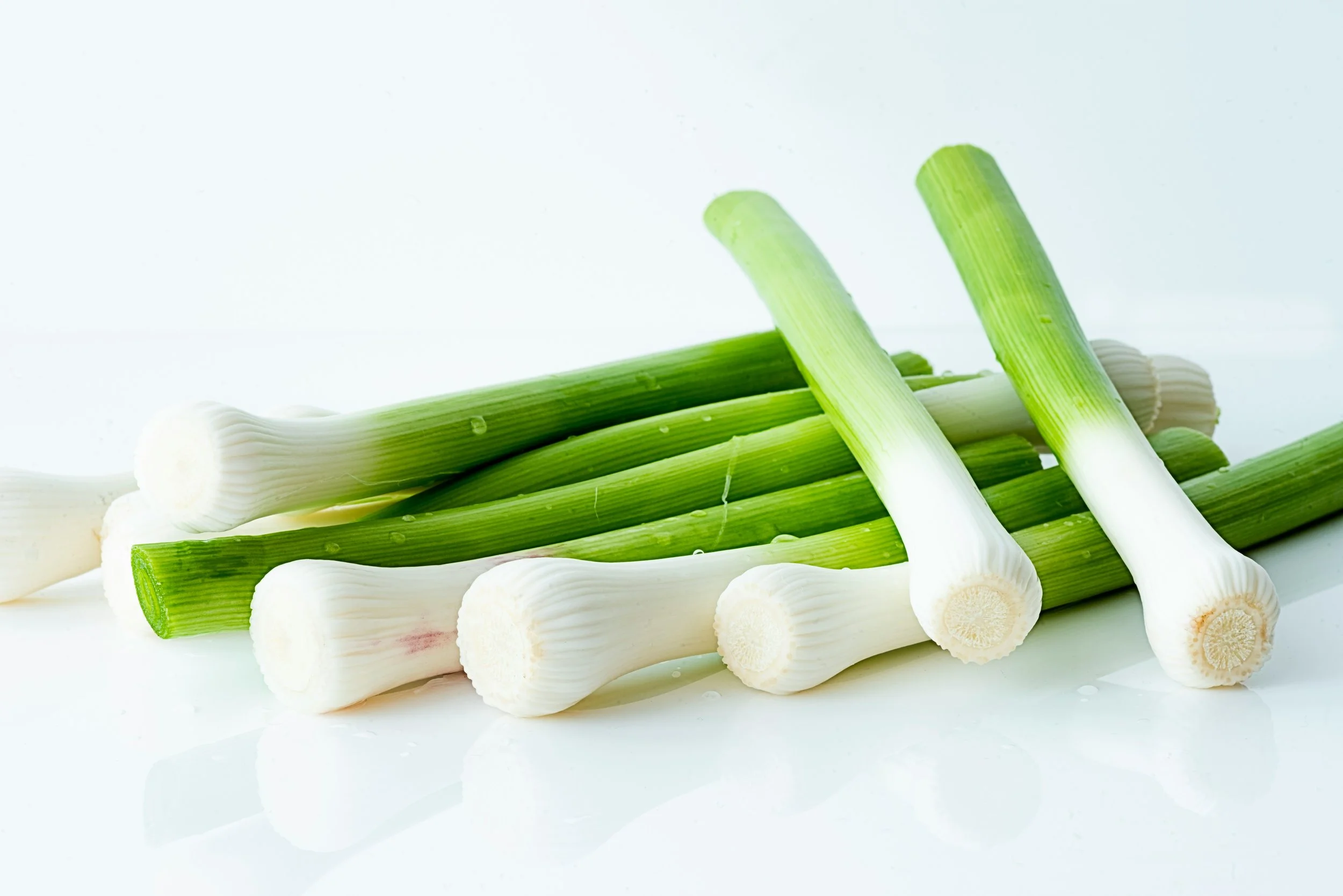
The white part of a spring onion (aka scallion) contains the FODMAP fructans, but the green part does not. So the green part is really invaluable in adding some of that onion flavour to a dish.
You can use it at the beginning of the cooking process of something like a stew where you would normally use onion, but I often use it and the end, chopped (using scissors) directly over the serving next to a drizzle of garlic oil. Oh yeah!
Did you know, though, that if you just stick the white bits with the root in a cup of water, the green parts will grow back? I mean you can virtually see them growing! The first time I tried this I couldn’t believe it - by the next morning the green parts had already grown half an inch!
So now I always have some spring onions in a little glass of water on the kitchen windowsill, available to chop some green off whenever I need.
Just make sure you change the water every couple of days or it can become stinky. And they will deteriorate a little bit over time so I recommend changing them for new ones every few weeks.
5. Maple syrup > honey
This is now a staple for me. I have always relied on honey for a little sweetness when I need it, but it is not low-FODMAP and definitely sometimes feels like a trigger for my symptoms.
Enter one of Canada’s great national foods, maple syrup. A natural product made from the sap of maple trees, I use it to sweeten everything from breakfast smoothies to muffins.
Of course, like all sweeteners, it contains a huge hit of sugar so should be consumed in moderation, but if you do need a bit of low-FODMAP sweetness from an unrefined product, this should be your go to.
Sometimes it is blended with other things so just make sure you buy 100% maple syrup (check the label).
So there you have it. Discovering these tricks really helped me in making tasty food that I could really enjoy but without the FODMAPs.
Let me know how you get on. Happy cooking!